Annexal Team · Sep 2026 · 7 min read
ChatGPT can be a useful starting point when you are planning a business website. It can help you turn early ideas into a clearer brief, organise questions, explore page topics, or prepare a first pass at content. But using an AI tool is not the same as deciding what the website needs to do for your business or confirming that it is ready to launch.
The useful question is not only “Can ChatGPT create a website?” It is: which parts of the website project can AI help you prepare, and which decisions still need a responsible business owner or website professional?
This guide is for business owners who want to evaluate ChatGPT thoughtfully before choosing an AI/DIY route, a more tailored website project, or a combination of both.
In this guide
- Where ChatGPT genuinely helps — briefs, outlines, and organizing information
- The decisions AI can’t make for you — approvals, integrations, and launch ownership
- How to compare an AI/DIY route against a more tailored website project
- A launch-readiness checklist to run through before a site goes live
Start with the business job the website needs to do
Before choosing a tool, define what visitors should be able to understand and do on the website. A business website may need to explain a service, present products, generate enquiries, support appointments, guide customers to the right next step, or give an internal team a clearer way to update information.
Write down the practical outcome you need from the site. Then list the information, pages, actions, and systems required to support that outcome. This gives you a way to assess whether an AI-assisted approach fits the project or only helps with an early part of it.
Where ChatGPT can be useful in the planning process
ChatGPT can be used as a structured thinking tool. A business owner may use it to turn notes into a draft project brief, organise a list of customer questions, create a first outline for key pages, or generate options that a human reviewer can evaluate.
Used this way, it can help you arrive at a more useful website conversation. It does not remove the need to check whether descriptions of your business, services, products, policies, locations, offers, or customer process are accurate before they appear on a public website.
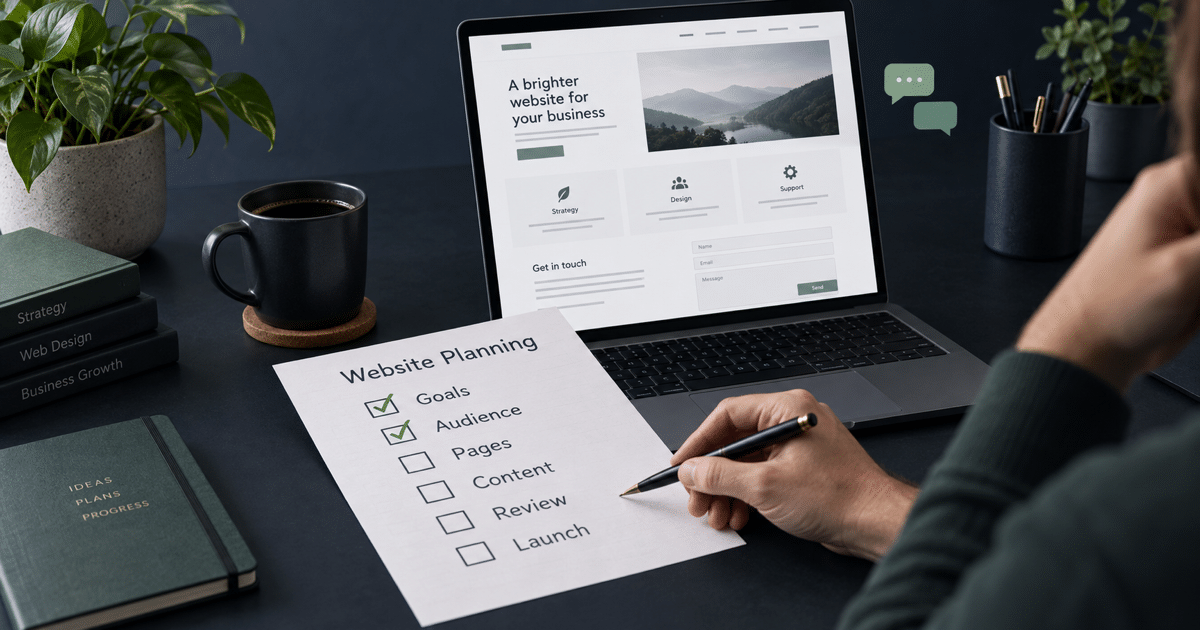
A practical starting exercise is to prepare a short project brief containing:
- what the business offers and who it serves;
- the main action visitors should take;
- pages or information customers regularly ask for;
- examples of websites you find useful, with notes about why;
- known issues with the current website; and
- systems or tools the new site may need to connect with.
You can use ChatGPT to help organise this information, but the business should remain responsible for checking it and making the final decisions.
Questions ChatGPT cannot answer for your business automatically
A website needs more than words on a page. Before launch, someone still needs to decide what should be included, how customers move through the site, who owns the content, what systems are required, and how the completed site will be reviewed.
For example, ask:
- Which services, products, audiences, and locations should the site represent?
- What should a visitor do after reading a page?
- Which pages need approval from sales, operations, legal, or another stakeholder?
- Which forms, booking tools, payment services, CRM platforms, email systems, or other tools must connect to the site?
- Who will check the final wording, images, links, forms, mobile display, and customer journey before launch?
- Who will own the domain, hosting, software accounts, subscriptions, and ongoing updates?
Key insight
These are project decisions, not merely writing prompts. If they are unclear, clarify them before treating a generated draft or prototype as a finished business website.
AI, DIY, or professional website help: compare the right things
An AI-assisted route may suit a business that has a limited website need, clear source information, someone available to review the details, and a defined launch responsibility. A more involved project may need a broader process when the site has multiple audiences, detailed services, tailored design requirements, complex forms or integrations, ecommerce needs, a difficult content migration, or a high-stakes customer journey.
The goal is not to make every project larger than necessary. It is to choose a process that makes the important decisions visible. Compare options by the work included and the responsibilities left with your team, rather than by the label attached to a tool.
If you are evaluating those project requirements, reviewing Annexal’s website design and development services can help put the decision into a commercial context.
Ask about the work that happens after a first draft
A first draft of a website is not the same as a launch plan. Before relying on an AI-generated draft, ask how the following will be handled:
This checklist is not a claim that every business needs every item. It is a way to identify the responsibilities that apply to your own project before you choose a route.
When a more tailored website process may be appropriate
Consider a more involved website process when the website needs to support a complex offer, multiple buyer journeys, ecommerce, integrations, a substantial content change, or a specific brand and design direction. A professional website project can also be useful when no one on the business team has clear ownership of the information, approvals, testing, or ongoing maintenance.
That does not make AI irrelevant. It may still help with research, content preparation, idea organisation, and early drafts. The important distinction is that AI-assisted work should fit into a clear project process rather than replace the decisions that make a business website accurate and useful.
Make the decision with a clear brief
Before deciding whether ChatGPT is enough for your business website, create a short brief that explains the business goal, intended audience, required pages, source information, necessary tools, review process, and launch responsibility.
A clear brief helps you assess an AI/DIY option honestly. It also makes it easier to compare a more tailored website-development proposal if your requirements grow beyond an initial draft.
Considering a new or redesigned business website?
Frequently asked questions
Can ChatGPT create a business website?+
ChatGPT can be used to help prepare parts of a website project, such as organising a brief, outlining pages, or creating material for human review. A business should still decide the website’s purpose, verify its business information, assign approvals, and confirm how launch and ongoing ownership will be handled.
What should a business owner decide before using ChatGPT for a website?+
Define the business goal, intended audience, key pages, visitor actions, source information, required tools or integrations, review process, and who is responsible for launch and ongoing updates. These decisions make it easier to judge whether an AI/DIY route fits the project.
Can a ChatGPT-assisted website be launched without a professional developer?+
That depends on the project’s requirements and who can take responsibility for the final website. Before launch, make sure the business has a clear process for checking content, important user journeys, links, forms, mobile display, accounts, and ongoing ownership. Seek the right technical or professional help when the project needs capabilities your team cannot confidently review or manage.
When should a business consider professional website help?+
Consider professional help when the project has complex requirements, multiple audiences, ecommerce, integrations, a substantial content migration, a tailored design need, or no clear internal owner for accuracy, approvals, testing, or ongoing maintenance. The right level of help depends on the website’s purpose and the responsibilities involved.
